
The August Reset: Research-Backed Ways to Prepare Your Child for Back to School

As August begins, back-to-school preparation often becomes a shopping exercise: backpacks, notebooks, lunch boxes, uniforms, and new shoes.
As parents, we often spend August checking off school supply lists. While these preparations are important, research suggests that the most valuable back-to-school preparation doesn't happen in the shopping aisle; it happens at home, through everyday experiences that help children transition from the relaxed rhythm of summer to the structure of the classroom.
The good news? You don't need to spend August doing worksheets or turning your home into a classroom. In fact, child development experts suggest the opposite.
The transition back to school asks children to make several adjustments at once. They must wake earlier, follow a structured schedule, sustain their attention, manage frustration, remember instructions, separate from caregivers, and navigate relationships with teachers and classmates.

Research on child development suggests that these abilities are closely connected to sleep, executive function, emotional regulation, play, and predictable routines. This means August offers families something valuable: enough time to prepare gradually, without turning the final weeks of summer into school before school begins.
1. School Readiness Is About Much More Than Academics
When people hear the term school readiness, they often think about recognizing letters, counting to 100, or writing a child's name.
However, the American Academy of Pediatrics challenged this narrow view in its 2019 technical report, "School Readiness." The report explains that readiness is a combination of physical health, social-emotional development, language, approaches to learning, and cognitive skills. In other words, a child who can regulate emotions, follow routines, communicate with others, and stay curious is often better prepared for school than a child who has simply memorized academic facts.
This perspective shifts the question from "What should my child know?" to "How can I help my child feel ready to learn?"
2. Focus on the Brain Before the Books
One of the most influential papers in developmental psychology, "School Readiness and Self-Regulation: A Developmental Psychobiological Approach" by Clancy Blair and Cybele Raver (2015), argues that self-regulation is one of the strongest foundations for school success. The authors explain that children need to manage attention, control impulses, remember instructions, and adapt to changing situations before they can fully benefit from academic instruction. Fortunately, these skills don't develop through flashcards.
They develop when children build with blocks, solve puzzles, invent imaginary worlds, cook with their parents, negotiate rules during a game, or help plan a family outing. These activities strengthen what psychologists call executive functions (working memory, cognitive flexibility, and inhibitory control), the very skills children rely on throughout the school day.

More recently, developmental psychologist Philip Zelazo and colleagues expanded this idea in their 2024 paper, Fostering Executive Function Skills and Promoting Far Transfer to Real-World Outcomes. They argue that executive function develops most effectively when children practice meaningful life skills rather than isolated cognitive exercises. Activities such as cooking, planning family outings, imaginative play, and collaborative problem-solving help children apply these thinking skills in authentic situations, exactly the kind of flexibility they will need at school.
Instead of asking your child to complete another worksheet this August, consider asking them to build the tallest tower possible, invent a restaurant at home, or help prepare dinner by following a recipe. These experiences exercise the brain in ways that closely resemble the real demands of school.
3. Don't Underestimate the Power of Play
Many parents worry that if children spend August playing, they'll "fall behind."
Research tells a different story.
In its landmark clinical report "The Power of Play: A Pediatric Role in Enhancing Development in Young Children" (2018), the American Academy of Pediatrics reviewed decades of developmental research and concluded that play is essential for healthy brain development. The report explains that playful experiences strengthen executive function, language development, creativity, problem-solving, and self-regulation while helping children build secure relationships with adults and peers.
New research continues to support this conclusion. A 2025 study by Karimi and colleagues found that both executive function and fine motor skills independently predicted school readiness. This means that activities such as drawing, cutting with scissors, threading beads, building with construction toys, and creating art projects do far more than strengthen little hands, they also help develop the cognitive skills children rely on for classroom learning.

Play is not a reward after learning.
For young children, play is one of the primary ways learning happens.
A pretend grocery store becomes a lesson in math, literacy, communication, and social skills. Building a fort requires planning, collaboration, and creative problem-solving. Even a simple game of "Simon Says" strengthens attention and inhibitory control.
These are exactly the kinds of skills children will use when they enter the classroom in September.
4. Reset Sleep Gradually
If there is one habit worth adjusting before school begins, it is sleep.
Researchers Jodi Mindell and colleagues studied more than 10,000 children across 14 countries in their 2015 paper, "Bedtime Routines for Young Children: A Dose-Dependent Association with Sleep Outcomes." They found that children with consistent bedtime routines fell asleep faster, slept longer, woke less during the night, and experienced fewer daytime behavior difficulties than children without regular routines.
These findings continue to be supported by more recent research. In 2025, Belluardo and colleagues reported that children who consistently obtained sufficient sleep demonstrated stronger inhibitory control, one of the core executive functions responsible for attention, impulse control, and classroom behavior. Rather than changing bedtime abruptly the weekend before school begins, gradual adjustments throughout August give children's brains time to adapt.
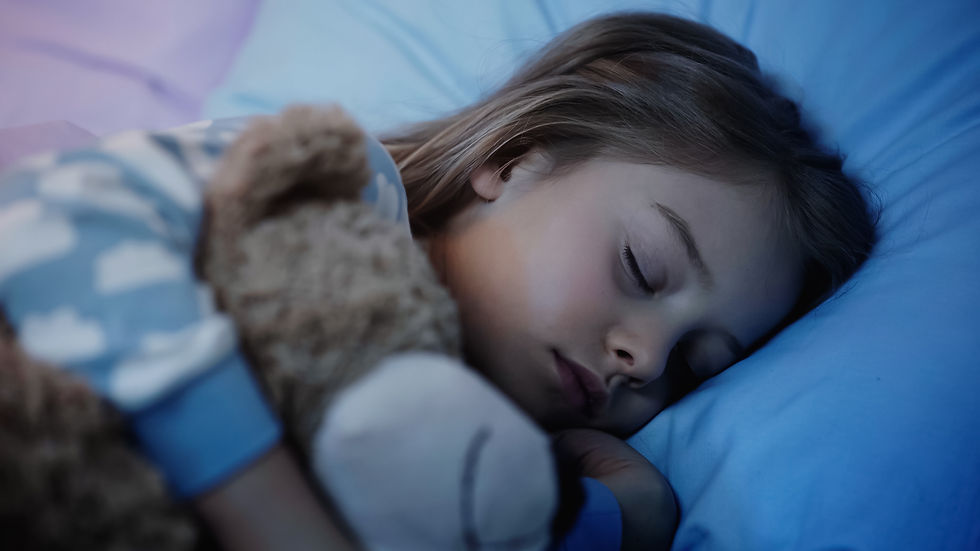
Rather than waiting until the last weekend before school, begin shifting bedtime and wake-up time gradually, about 15 minutes every few days. This gentle transition gives your child's internal clock time to adjust and makes those first school mornings much easier.
5. Confidence Comes from Familiarity
Children often worry less about learning than they do about the unknown.
Will I know where to put my backpack?
Will I remember what to do?
Will I make friends?
One of the simplest ways to reduce anxiety is to make the unfamiliar feel familiar before the first day arrives.
Practice opening lunch containers. Let your child pack their backpack for a family outing. Visit the school playground if it's accessible. Walk through what a typical morning will look like.
These small experiences create predictability, and predictability helps children feel safe. As the American Academy of Pediatrics notes in its "School Readiness" report, emotionally supportive experiences and consistent routines help children develop the resilience and confidence they need to engage in learning.
The Best Back-to-School Preparation Isn't Found in a Store
By the time September arrives, the goal isn't to have a child who already knows everything.
Preparing children for school isn't about giving them a head start on next year's curriculum.
It's about giving them the conditions their brains need to learn.

A child who enters the classroom rested, emotionally secure, curious, and confident is already carrying some of the most powerful predictors of academic success identified by developmental science.
And those qualities aren't built in the final weekend before school.
They are built throughout August, one ordinary family moment at a time.
References
American Academy of Pediatrics. "School Readiness." Pediatrics, 2019.
Blair, C., & Raver, C. C. "School Readiness and Self-Regulation: A Developmental Psychobiological Approach." Annual Review of Psychology, 2015.
Yogman, M., et al. "The Power of Play: A Pediatric Role in Enhancing Development in Young Children." Pediatrics, 2018 (reaffirmed 2025).
Mindell, J. A., et al. "Bedtime Routines for Young Children: A Dose-Dependent Association with Sleep Outcomes." Sleep, 2015.


Comments